
Onegin
Details
In Brief
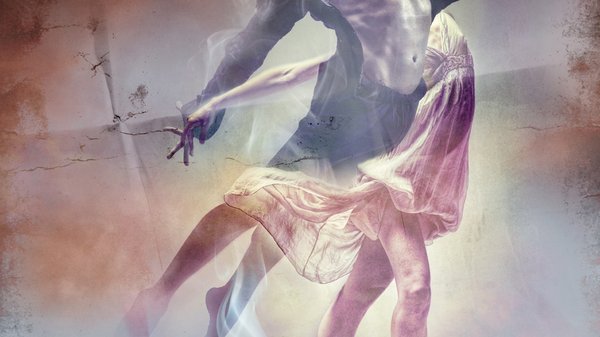
The music of Tchaikovsky brings Pushkin's legendary melancholic to life once again, this time as a ballet by choreographer John Cranko. Much too late to avoid paying the price for stifled and destroyed human lives, Onegin realises that love can awaken the soul and give meaning to life. Tatiana's waves of passion and suffering ultimately block a path to redemption littered with ripped-up love letters.
Music by Kurt-Heinz Stolze (after P. I. Tschaikovsky). Music published by Adrian Thomé Musikverlag Bodensee.
Parental guidance
Events
Premiere: April 13, 1965
Synopsis
Act I
Scene 1
The garden of Madame Larina’s house
The inhabitants of the house are preparing for Tatyana’s birthday. Olga is dancing with her friends while Tatyana is reading. The young girls begin a charming old game: if one looks into a mirror she will see her love. The superstition is realised for the joyful Olga, who sees her fiancé Lensky. When the dreamy Tatyana glimpses into the mirror, she sees Onegin, whom Lensky has invited to the Larin estate to introduce him. The girl falls in love with the stranger at first sight. Olga and Lensky dance a happy pas de deux. Tatyana walks with Onegin in the garden, but the conceited visitor from the city is cold and reserved; he ignores the girl completely.
Scene 2
Tatyana’s bedroom Tatyana is writing a letter to Onegin, confessing her passionate love to the man she hardly knows. While writing, she falls asleep. In her dream, her desire comes true: she catches sight of Onegin in the mirror, and, this time, he reciprocates her love.
Act II
Scene 1 Madame Larina’s house
Onegin and Lensky have been invited to Tatyana’s birthday. She is nervous, yearning to receive a reply to her letter. When she is alone with Onegin, he brashly hurts her feelings by tearing the letter to pieces in his wrath. The merciless Onegin later wounds the soul of the girl in love again when he begins to court Olga with scandalously spectacular zeal. Prince Gremin, an old friend of the Larins, arrives at the celebration and dances with Tatyana. The girl is watching Onegin during the dance but she must be disappointed: The object of her affections devotes all his attention to Olga. The furious Lensky demands redress and challenges his friend to a duel.
Scene 2 A desolate park
Tatyana and Olga are begging to Lensky to cancel the duel. Onegin is ready to reconcile, but his deeply hurt friend is adamant. At the duel, Onegin kills Lensky.
Act III
Scene 1 Prince Gremin’s ball, ten years later
Tatyana is married to Prince Gremin. The prince holds a ball where Onegin appears. The man of the world who has seen only disappointment now realises that lost the only true love of his life when he refused Tatyana. When he sees Tatyana – now Princess Gremina – he hopes to revive her old feelings. But Tatyana turns away from him.
Scene 2 Tatyana’s boudoir
Onegin announces himself to the princess in a letter. Tatyana wants to avoid meeting him and asks her husband not to leave her alone that night. Onegin confesses his love to her passionately. Tatyana’s soul is tormented as old emotions have not entirely faded. Eventually, common sense wins out: she rejects the man’s advances and – paying back the old debt – tears his letter to pieces.
Media
Reviews
"The corps de ballet dance Cranko’s choreography for the garden and party scenes with vibrant life and were finely synchronised. The Hungarian National Ballet honoured Cranko’s memory with this fine production.”
Stuart Sweeney, Critical Dance
Ballet guide
Introduction
Onegin is the most brilliant piece of the trilogy of choreographies by legendary John Cranko. Although Romeo and Juliet and The Taming of the Shrew are also audience favourites, it is Onegin the masterpiece that poses an enormous challenge to even the greatest ballet companies of the world. It is no accident that such prestigious institutions as the Met, Covent Garden and the Berlin and Vienna operas have kept Cranko’s works continuously in their repertoires, reaping enormous success for decades. In the case of Onegin, this is not only a credit to the choreographer’s marvellous artistic ability, but also shows that Pushkin’s novel in verse is a gem of world literature which depicts eternally universal human relationships and situations. Cranko adapted the story to the language of dance in such articulate manner that knowing Pushkin’s immortal piece of literature is not entirely necessary. Pushkin’s work had never before been transformed into a ballet, only the well-known opera had existed, and it is once more the music of Tchaikovsky that accompanies the dance piece. However, Kurt-Heinz Stolze did not use a single note from the opera, he mostly provided music to the ballet by rearranging The Seasons cycle by the composer.
Onegin has not grown stale over time, many outstanding dancers see the characters of Onegin or Tatiana as the role of their dreams and how many would love to bring these characters to life on the stage. It is obvious that Cranko had a very precise understanding of ballet technique as well as of the depths of the human soul. As if he had timed the dramaturgical elements to the tenth of a second so as not to say too much, but still markedly emphasise the main lines of the plot. He knew and understood exactly how to transmit it all to the audience in the language of dance. He invented such spectacular and bravura solutions for the stage as the mirror scene, when the audience fancies there to be a mirror on the stage, even though we can only see a “duplicated” Tatiana on either side of an imaginary axis. Moreover, the set of steps used in the choreography is extremely rich, and yet the audience can interpret it easily, even while it poses a challenge to the dancers. John Cranko’s masterpiece was first presented by the Hungarian National Ballet in 2002. A decade later, in 2012, Onegin was staged with a new set and new costumes, which is a credit, on the one hand, to the meticulous work of set and costume designer Thomas Mika, and on the other hand, to the work of the OPERA set and costume workshops, as well as the dressmaker’s department, who implemented the designs at a world standard. Since the March 2022 reopening of the Opera House, the ballet featuring these designs can be seen on stage again.
Krupa Zsófia
On John Cranko
John Cranko’s unexpected death (of heart attack) during his company’s return flight from the United States inflicted a shock on the Stuttgart Ballet from which it only recovered by a long and difficult process lasting several years. Cranko had built up the Stuttgart ensemble and led it to the forefront of the ballet companies of Western Germany (the then Federal Republic), helping the city to become an international success as one of „capital cities” of classical dance. He was the father of the so-called „Stuttgart ballet miracle”. He was also a father-figure to the members of the company; his ability to integrate and to develop dancers individually is well remembered. The loss of this unique personality left a gap which could not be without artistic consequences – and these were made manifest in the subsequent administration. Glen Tetley’s directorship, which lasted from 1974 to 1976, remained in the final analysis unsuccessful and unfortunate, in spite of the fact that Tetley created several important pieces during this time. During Cranko’s term of office, the life of the Stuttgart Ballet was too heavily influenced by his personality for a new style of leadership to be accepted both on stage and behind the scenes. Only when Marcia Haydée took on directorship of the Stuttgart Ballet as Tetley’s successor, and clearly declared her intention to nurture and continue the Cranko inheritance, did the ensemble’s lack of direction come to an end.
John Cranko was no unknown quantity when he came to Stuttgart. On the contrary, he already had a name for himself in Great Britain as a young and promising choreographer, and he had already produced Pokoviev’s Romeo and Juliet in 1958 with the Milan La Scala company. It was his premiere production of Benjamin Britten’s The Prince of the Pagodas, created for the Royal Ballet in 1957, which earned him an invitation in 1960 to the Württemberg (now known as the Stuttgart) Theatre as guest choreographer. The theatre director, Walter-Erich Schafer – without whose contribution the later success of Cranko and his company is barely conceivable – installed Cranko as the new ballet director of his theatre from 1961 onwards, after the production of The Prince of the Pagodas. Before Cranko, who held the position until his death, along with that of chief choreographer for the Bavarian State Opera Ballet in Munich at intermittent periods, Nicholas Beriozoff had already done a great deal of foundation work. But in spite of this, Stuttgart was more or less unknown in the ballet world, like the rest of post-war Germany. John Cranko, in an example to other West German towns, was encouraged to smooth the way for a balletic tradition which could survive the death of its founder. In all probability, he would never have had such an opportunity in Great Britain.
John Cranko, who had already begun to choreograph as a student in Kapstadt, was possessed of a particular talent for the multiple-act, narrative ballet. He added many such works to the international repertoire, which have come to be regarded as classics of the genre. Cranko was convinced that the narrow base of the existing repertoire should be expanded continually. His most outstanding contributions are productions such as Prokofiev’s Romeo and Juliet (in the Stuttgart version, for which, in 1962, he won the recognition of press and public alike with the title of ballet director), Onegin, choreographed to a collage of music by Tchaikovsky (premiered in 1965, and reworked in 1967), and The Taming of the Shrew (created in 1969 to music by Domenico Scarlatti, adapted by Cranko’s associate Kurt-Heinz Stolze). The ballets are danced by numerous international companies, while other full-length Cranko ballets such as Swan Lake, The Nutcracker, and Carmen were important in Stuttgart to the image of the ensemble and its repertoire.
The Stuttgart Ballet’s regular work with other choreographers – for instance Peter Wright, the company’s ballet master at the time, who brought his notable production of Giselle on to the stage in 1966, and Kenneth MacMillan – was part of the Cranko’s strategy. What is more, he improved the technical level of the company, and was a decisive force in the careers of dancers such as Marcia Haydée, Ray Barra, Birgit Keil, Egon Madsen, Richard Cragun, and Heinz Clauss. Supported by the energetic Noverre Society, he paid particular attention to the promotion of young choreographic talent such as that of John Neumeier, Ashley Killar, Gray Veredon, and Jiry Kylián. In addition, he used the Noverre Society to educate broad sections of the audience and convert them into connoisseurs of classical dance.
Along with the early creations Pinapple Poll (1951) and The Lady and the Fool (1954), both of which were originally presented with the Sadler’s Wells Theatre Ballet, several Stuttgart pieces stand out among Cranko’s one-act short ballets – these include Jeu de cartes, Opus 1 (both created in 1965), and Brouillards (1970). Cranko’s delight in experimentation was particularly apparent in Presence (1968), which arose out of a collaboration with the contemporary German composer Bernd Alois Zimmermann, and which illustrated, among other works, Cranko’s sense of humour and fun in movement, which never lost its Englishness even in Germany. Die Befragung (1967) and Spuren (1973) exemplify Cranko’s commitment to social criticism. On the other hand, Initialen R.B.M.E. (1872) is the choreographer’s individual homage to „his” soloists, Richard Cragun (R.), Birgit Keil (B.), Marcia Haydée (M.), and Egon Madsen (E.).
John Cranko did not have a strong stylistic influence in terms of the development of a new language of dance. He worked on the foundation of classical dance, which he sought to modify as befitting the times. George Balanchine’s neo-classicism is recognizable as the pattern for all of Cranko’s concert pieces (for example L’estro Armonico to Vivaldi, 1963). However, it is the highly dramatic and expressive pas de deux which may be considered „typical Cranko”, as they are to be found in the full-length ballets. Apart from these, Cranko’s abilities as leader of a ballet company and creator of new full-length ballets have had the most influence of all – not least on the former director of the Hamburg Ballet, John Neumeier. In Cranko’s time, numerous choreographers, directors, ballet masters, educationalists, and dancers emerged from the environment of the Stuttgart Ballet, and they in turn made a vital contribution to the development of classical dance in the Federal Republic. The ballet school attached to the Württemberg Theatre, which Cranko built up with the help of his ballet mistress Anne Woolliams after the fashion of the big international schools, was the first truly professional academy of its kin din the Federal Republic. John Cranko’s influence, not just in Germany but on the international dance scene, cannot be overestimated; and in that sense his presence continues to be felt today.
Horst Vollmer
(In: International Dictionary of Ballet. Detroit: St. James Press, 1993)